
Photodynamic Therapy (PDT)
Photodynamic therapy is a simple, non-invasive procedure which is used to treat precancerious skin lesions.
What is Photodynamic Therapy (PDT)
Photodynamic Therapy (PDT) is a non-surgical treatment that uses a light-sensitive cream, known as a photosensitiser, together with a specific light source to target abnormal or sun-damaged skin cells while minimising damage to the surrounding healthy tissue.
Depending on the treatment method, PDT may be used to treat actinic keratoses, also known as solar keratoses, and selected superficial skin cancers. Treatment may also improve the overall appearance and texture of sun-damaged skin.
There are two main ways the light can be delivered:
-
Using a medical light in the clinic
-
Using natural daylight outdoors
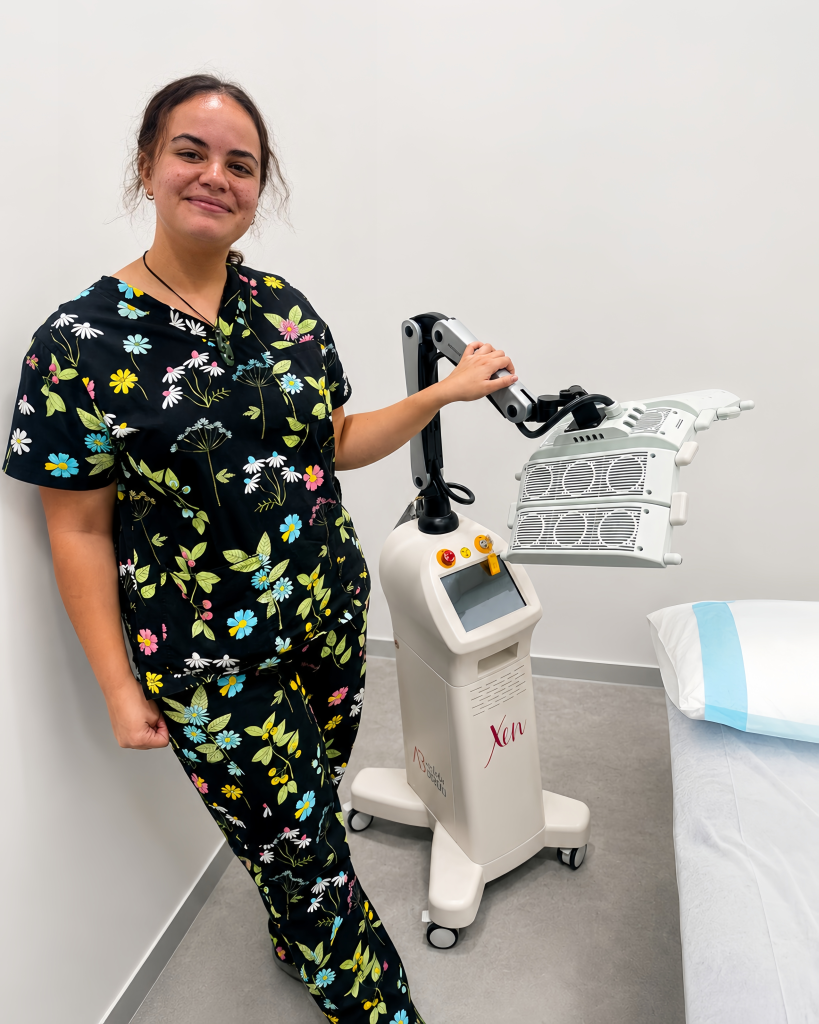
Red Light PDT
How it works:
Red Light PDT combines a photosensitising cream with a specialised XenLED® red LED lamp to selectively target and destroy sun-damaged or abnormal skin cells while preserving the surrounding healthy tissue.
The photosensitising cream is applied to the treatment area and left to absorb for approximately two to three hours. The area is then exposed to a 635 nm XenLED® red LED light source for approximately 15 minutes to activate the treatment.
Red Light PDT may be used to treat:
- Actinic keratoses, also known as solar keratoses
- Selected superficial skin cancers
- Signs of sun damage and uneven skin texture
How much time should I allow?
Please allow approximately:
Two to three hours for the photosensitising cream to absorb
15 minutes in the treatment room under the XenLED® red LED lamp
What should I consider?
Red Light PDT is performed entirely within the clinic and is not affected by the weather.
The light may feel quite bright during treatment. Some stinging, warmth or burning sensations are common while the treatment is being activated.
Natural Daylight PDT
How it works:
Natural Daylight PDT uses natural daylight to activate the photosensitising cream. It is generally a gentle and well-tolerated treatment with minimal discomfort and downtime.
Natural Daylight PDT is recommended for the treatment of actinic keratoses, also known as solar keratoses.
How does it work?
After the treatment area has been prepared and the photosensitising cream and sunscreen have been applied, you will spend approximately two hours outdoors. Natural daylight activates the cream and treats the affected skin.
How much time should I allow?
Please allow approximately two hours outdoors following the application of the cream and sunscreen.
What should I consider?
Natural Daylight PDT involves a longer treatment period and depends on suitable weather conditions and the time of year.
It is important to carefully follow your clinician’s instructions regarding sun exposure, timing and skin protection on the day of your treatment.

Is PDT suitable for me?
Your clinician will assess your skin and discuss whether Red Light PDT or Natural Daylight PDT is appropriate for your condition.
Treatment recommendations will depend on the type, location and extent of the affected skin, as well as your individual circumstances.
What to Expect Afterwards
- The treated skin usually becomes red and sore, like sunburn, and may blister or crust for a few days.
- This reaction peaks around 3–4 days and heals within a week.
- The result is usually clearer, smoother skin with fewer sun-damaged spots, and excellent cosmetic outcome.